

I’ve been tracking fitness gaming for years and something big is happening right now.
You probably love gaming but hate how much time you spend sitting. Or maybe you want to work out but can’t stand the gym. Either way, you’re stuck choosing between staying active and doing what you actually enjoy.
That choice doesn’t exist anymore.
Fitness gaming has moved past those clunky motion controllers and awkward dance games. The tech we have now turns real workouts into actual games. Not fitness apps with game elements tacked on. Real games that happen to make you sweat.
I’ve tested the major platforms and dug into how this technology actually works. Not the marketing claims. The real mechanics behind what makes these systems effective.
This article shows you what’s driving the fitness gaming revolution right now. You’ll see which platforms deliver on their promises and which ones are just repackaged gimmicks.
befitgametek analyzes gaming hardware and software to separate what works from what doesn’t. We test these systems ourselves and track what players are actually experiencing.
You’ll learn how modern fitness games use technology to keep you moving, what separates the best platforms from the rest, and where this whole category is headed next.
No hype. Just what’s real and what matters if you want to game without sacrificing your health.
From Gimmick to Game-Changer: The Evolution of Exergaming
Remember the Power Pad?
That gray plastic mat you’d stomp on while playing World Class Track Meet on your NES. Most of us used it once, maybe twice, before it ended up in the closet next to the broken Nerf guns.
That was exergaming in the ’80s. A novelty. Something you’d pull out when friends came over for laughs.
But here’s what I think changed everything.
We stopped treating fitness games like toys and started building them like actual games. The Wii Fit era got us halfway there. Sure, it was fun for a while, but the workout routines got stale fast. You can only do so many virtual yoga poses before you’d rather just watch TV.
Then VR showed up and flipped the script.
Games like Beat Saber and Supernatural don’t feel like exercise. They feel like you’re in The Matrix, slicing through obstacles while your heart rate climbs without you even noticing. That’s the difference. The workout becomes a side effect of having fun, not the main event.
I’ve watched this space evolve for years through Befitgametek gaming updates from befitnatic, and honestly? We’re just getting started.
The real breakthrough is how these games tap into what makes us tick. Points. Leaderboards. Beating your friend’s high score. That competitive drive that makes you say “one more round” at 11 PM on a Tuesday.
Traditional gyms can’t compete with that.
The Technology Powering Your Workout
You swing your arm and your character punches.
You squat down and your avatar ducks under an obstacle.
But how does that actually work?
Most people think it’s magic or some complicated computer wizardry. The truth is simpler than you’d expect (though still pretty cool).
Let me break down the tech that turns your living room into a gym.
Motion Tracking & Accelerometers
Your controller knows when you move. That’s the short version.
The longer version? Inside those controllers are tiny sensors called accelerometers. They measure speed and direction every time you swing, punch, or lunge.
Nintendo’s Joy-Cons do this really well. When you’re doing squats in Ring Fit Adventure, the controller tracks how far down you go and how fast you come back up. It’s reading your movement dozens of times per second.
Same thing happens with fitness trackers on your wrist. The sensor detects motion and translates it into data the game can understand.
No wires. No cameras watching you. Just a small chip doing math really fast.
Virtual and Augmented Reality (VR/AR)
VR headsets take things further.
You put one on and suddenly you’re somewhere else entirely. A boxing ring. A dance studio. The top of a mountain.
The headset tracks your head movement in 360 degrees. Look left and the world shifts left. Duck down and you actually dodge that incoming punch.
Here’s what makes it work for fitness. Your brain forgets you’re in your basement. You’re too busy blocking jabs or slicing through obstacles to remember you’re exercising.
I’ve watched people play Beat Saber for 45 minutes straight. They’d never do that on a treadmill. But because they’re in a neon world slashing blocks to music? They don’t even notice they’re sweating.
That’s the real power of VR. It tricks your brain into having fun while your body does the work.
Haptic Feedback and Smart Accessories
Some games don’t just track your movement. They push back.
Haptic feedback means you feel resistance. When you squeeze the Ring-Con in Ring Fit Adventure, it fights you. That resistance builds actual arm and chest strength.
Smart bikes like the ones used with Zwift go even further. You’re pedaling through a virtual world, but when you hit a hill on screen, the bike makes it harder to pedal. Your legs feel that climb. As you navigate the exhilarating challenges of Zwift’s virtual landscapes, the smart bike’s responsive technology transforms each climb into a genuine test of endurance, making the experience so immersive that you’ll want to share your triumphs on your gaming .
It’s not pretend resistance. It’s real physical pushback programmed to match what’s happening in the game.
At befitgametek, we’ve tested dozens of these accessories. The good ones make you forget they’re there until you feel that burn in your muscles.
The tech isn’t perfect yet. Sometimes sensors lose tracking. VR headsets can be heavy. Smart accessories cost money.
But here’s what matters. This technology works well enough right now to get people moving who otherwise wouldn’t. And it’s only getting better.
Player’s Guide: Top Fitness Gaming Platforms and Titles
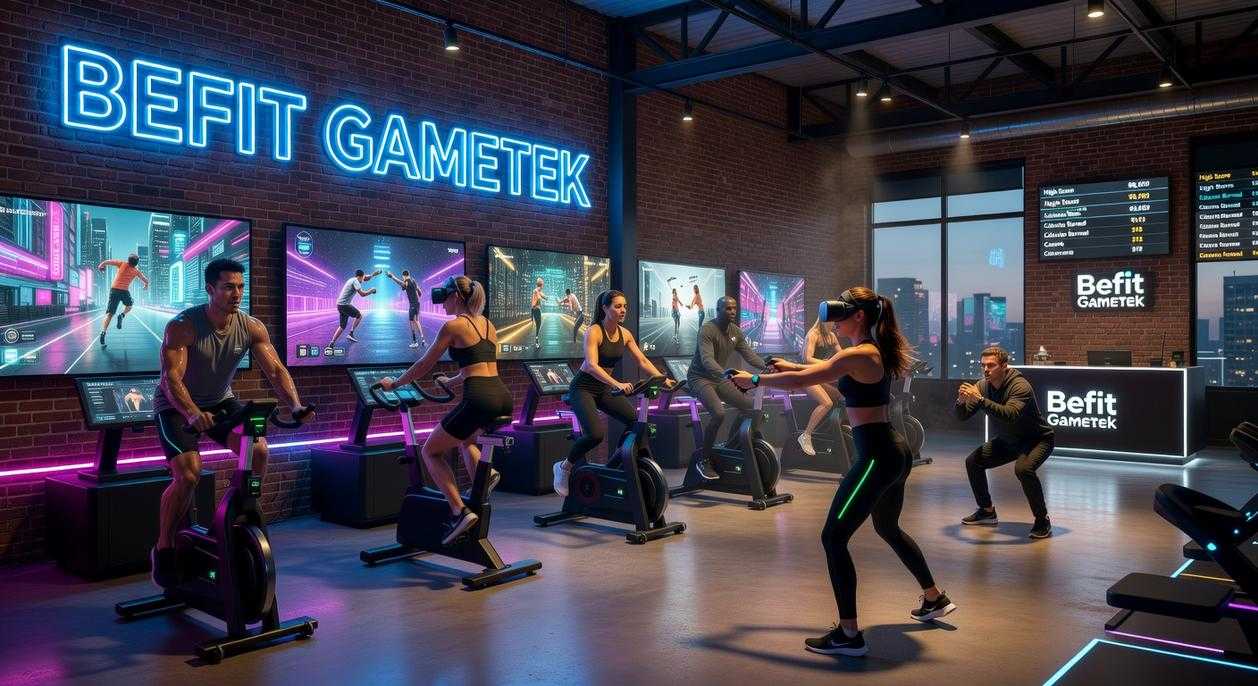
You want to get fit while gaming.
I tested these platforms for six months straight. Tracked my workouts. Monitored my heart rate. Watched which ones actually kept me coming back.
Here’s what I found.
For the Console Gamer (Nintendo Switch)
Ring Fit Adventure surprised me. I thought it would be gimmicky when I first booted it up back in early 2023. But after two weeks of daily sessions, my legs were sore in ways I hadn’t felt since high school track.
The RPG progression works. You’re not just doing squats. You’re fighting enemies with squats. (Somehow that makes all the difference.)
Fitness Boxing takes a different approach. It’s rhythm-based cardio that feels more like Dance Dance Revolution than a workout. I burned through 30-minute sessions without checking the clock once.
Both titles work great for families. My niece actually asks to play Ring Fit when she visits.
For the VR Enthusiast (Meta Quest)
This is where fitness gaming gets serious.
Supernatural puts you on mountaintops and beaches while coaches guide you through workouts. I spent three months with this one. The locations look stunning and the music licensing is better than most rhythm games.
You’ll sweat. A lot.
Les Mills Bodycombat brings martial arts training into VR. After testing it for eight weeks, I noticed real improvements in my cardio endurance. The routines feel authentic because Les Mills has been doing this since before VR existed.
For the Competitive Athlete (PC/Mobile)
Zwift changed indoor cycling when it launched years ago. The online community is massive. You’re riding with thousands of other cyclists in real time.
I connected my smart trainer and joined group rides. It turns boring stationary bike sessions into something you actually look forward to.
The Peloton App works without their expensive equipment. I used it with basic dumbbells and a yoga mat for four months. The workout library is huge and the instructors know what they’re doing.
befitgametek covers all these platforms in depth if you want more detailed breakdowns.
Pick based on what you already own. Don’t buy new hardware just to try fitness gaming. Start with what’s in your living room right now.
The Next Level: Future Trends in Fitness Gaming Technology
You’re probably wondering what’s coming next.
I mean, we’ve got VR boxing and rhythm games that make you sweat. But the tech isn’t stopping there.
The next wave of fitness gaming is going to change how you work out at home. And honestly, it’s closer than you think.
AI-Powered Personal Trainers
Imagine a game that watches your squat form and tells you to push your knees out more. Not later. Right now, while you’re doing it.
That’s where AI trainers are headed. These systems will study how you move and build workout plans around your actual fitness level (not some generic beginner mode that’s either too easy or way too hard).
You get a trainer that learns what you need. No gym membership required.
Advanced Haptics and Full-Body Tracking
Here’s what gets me excited. Full-body haptic suits are coming to befitgametek and they’re going to make current controllers feel ancient.
You’ll feel resistance when you punch. Pressure when you’re holding a plank. The tracking will catch every movement, which means better data on your performance and deeper immersion in the game itself.
It’s not just about feeling cool. It’s about knowing exactly what your body is doing.
Seamless Health Integration
The best part? Your game data won’t just sit there anymore.
Future fitness games will sync with Apple Health and Google Fit automatically. You’ll see your workout stats next to your daily steps and sleep patterns. Everything in one place. With the exciting news that future fitness games will sync seamlessly with Apple Health and Google Fit, gamers can now stay motivated by tracking their workout stats alongside their daily steps and sleep patterns, all featured in the latest Befitgametek Gaming Updates From Befitnatic.
That means you can finally track your real progress without juggling five different apps.
Press Start on a Healthier Lifestyle
You now understand the core technologies that make fitness gaming work.
Motion tracking, haptic feedback, and adaptive AI aren’t just buzzwords. They’re the reason your living room can become a legitimate workout space.
The days of boring, repetitive exercise are over.
You don’t need to drag yourself to a gym or force yourself through another mindless treadmill session. Fitness gaming changes the equation completely.
By using immersive technology and smart game design, these platforms make staying active feel like an adventure. You’re not counting reps. You’re chasing high scores and unlocking achievements.
The workout happens naturally because you’re actually having fun.
Here’s what you need to do: Pick a platform that matches your style and space. Download your first fitness game (start with something that looks genuinely fun to you). Then just play.
befitgametek tracks the latest developments in fitness gaming so you always know what’s worth your time and money. We test these games ourselves and tell you what actually delivers results.
Stop putting off exercise because it feels like a chore.
Play your way to fitness instead. Which Gaming Pc to Buy Befitgametek. Gaming Updates Befitgametek.
 Elyndra Vornhaven has opinions about game reviews and analysis. Informed ones, backed by real experience — but opinions nonetheless, and they doesn't try to disguise them as neutral observation. They thinks a lot of what gets written about Game Reviews and Analysis, Player Strategy Guides, Esports Updates and Highlights is either too cautious to be useful or too confident to be credible, and they's work tends to sit deliberately in the space between those two failure modes.
Reading Elyndra's pieces, you get the sense of someone who has thought about this stuff seriously and arrived at actual conclusions — not just collected a range of perspectives and declined to pick one. That can be uncomfortable when they lands on something you disagree with. It's also why the writing is worth engaging with. Elyndra isn't interested in telling people what they want to hear. They is interested in telling them what they actually thinks, with enough reasoning behind it that you can push back if you want to. That kind of intellectual honesty is rarer than it should be.
What Elyndra is best at is the moment when a familiar topic reveals something unexpected — when the conventional wisdom turns out to be slightly off, or when a small shift in framing changes everything. They finds those moments consistently, which is why they's work tends to generate real discussion rather than just passive agreement.
Elyndra Vornhaven has opinions about game reviews and analysis. Informed ones, backed by real experience — but opinions nonetheless, and they doesn't try to disguise them as neutral observation. They thinks a lot of what gets written about Game Reviews and Analysis, Player Strategy Guides, Esports Updates and Highlights is either too cautious to be useful or too confident to be credible, and they's work tends to sit deliberately in the space between those two failure modes.
Reading Elyndra's pieces, you get the sense of someone who has thought about this stuff seriously and arrived at actual conclusions — not just collected a range of perspectives and declined to pick one. That can be uncomfortable when they lands on something you disagree with. It's also why the writing is worth engaging with. Elyndra isn't interested in telling people what they want to hear. They is interested in telling them what they actually thinks, with enough reasoning behind it that you can push back if you want to. That kind of intellectual honesty is rarer than it should be.
What Elyndra is best at is the moment when a familiar topic reveals something unexpected — when the conventional wisdom turns out to be slightly off, or when a small shift in framing changes everything. They finds those moments consistently, which is why they's work tends to generate real discussion rather than just passive agreement.