
I’ve seen esports tournaments pull more viewers than the NBA Finals.
Let that sink in for a second. We’re talking about kids playing video games in front of computers, outdrawing professional athletes on a court.
But try telling someone that gaming is a sport and watch what happens. You’ll get eye rolls. You’ll hear about “real athletes” and “actual physical activity.” The gap between what’s happening in competitive gaming and what people think about it keeps growing.
Here’s the thing: this isn’t about whether you like video games or not.
why gaming should be a sport befitgametek comes down to measurable factors. We’re talking about player physiology, the mental demands these competitors face, and how professional gaming organizations actually operate.
I’m not here to convince you one way or the other. I’m here to lay out the real arguments on both sides.
This article examines what actually qualifies something as a sport. We’ll look at the physical toll on esports players (yes, there is one). We’ll break down the strategic depth that separates pros from casual players. And we’ll compare gaming’s structure to traditional sports.
You’ll walk away understanding both perspectives. Whether you think esports belongs in the sporting world or not, you’ll know why people on each side believe what they do.
What Defines a ‘Sport’? Establishing the Ground Rules
Let me ask you something.
What makes basketball a sport but chess just a game?
Most people point to the physical part. You run, you jump, you sweat. That’s what separates sports from everything else.
But here’s where it gets interesting.
The Merriam-Webster definition calls a sport “a contest or game in which people do certain physical activities according to a specific set of rules and compete against each other.” Sounds simple enough.
Except it’s not.
The Physical Exertion Problem
Take archery. An Olympic sport. The archer stands still and pulls a string. Their heart rate barely climbs.
Now look at a professional gamer during a tournament final. Their APM (actions per minute) hits 300. Their hands move faster than most people can track. According to a 2016 study from the German Sport University Cologne, elite esports players show reaction times and hand-eye coordination that rival traditional athletes.
So which one is more “physical”?
Some will argue that archery has centuries of tradition behind it. That’s why it counts. Fair point. But tradition doesn’t define what something is. It just defines what we’ve always called it.
Here’s what I think happens next. Within five years, we’ll see the first generation of kids who grew up watching Valorant and League of Legends the same way we watched the NBA. To them, the question of why gaming should be a sport Befitgametek won’t even make sense. It’ll just be obvious.
The real criteria aren’t about sweating. They’re about competition, skill mastery, and strategy under pressure.
Racing drivers sit in a car. Golfers walk and swing a club. Esports players execute split-second decisions while managing team coordination.
They all require different types of physical and mental ability. But they all require both.
The Case For: Why Gaming is Already a Sport
You want to know if gaming counts as a real sport?
I’m going to be straight with you. This debate gets messy because we don’t all agree on what makes something a sport in the first place.
But let me show you what happens inside a professional gamer’s body during competition.
The physical toll is real.
Pro gamers hit heart rates between 160 and 180 beats per minute during matches. That’s what marathon runners experience. Their cortisol levels spike like they’re in physical danger (because mentally, they kind of are). In the high-stakes world of competitive gaming, where pro players experience heart rates comparable to those of marathon runners, the innovative training techniques offered by Befitgametek are becoming essential for maintaining peak performance under pressure.
Can I prove that this alone makes gaming a sport? No. But it does kill the argument that gamers just sit there doing nothing.
Here’s something most people don’t know about gaming tech befitgametek. Top players execute 300 to 400 actions per minute. That’s five to seven precise inputs every single second.
Try that for an hour straight and tell me it doesn’t require elite motor skills.
F1 drivers and tennis players get praised for their reaction times and hand-eye coordination. Gaming demands the same thing. I’m not saying it’s harder or easier. I’m saying the skill ceiling is comparable.
Then there’s the mental game.
League of Legends and Valorant require split-second decisions with incomplete information. You’re coordinating with four teammates in real time while predicting what five opponents will do next.
Basketball and football work the same way. The strategic depth is there.
Now here’s where why gaming should be a sport befitgametek becomes obvious. Look at the infrastructure:
- Professional leagues with seasons and playoffs
- Prize pools hitting millions of dollars
- Salaried players with benefits
- Full coaching staffs and analysts
- Dedicated training facilities
That’s not a hobby. That’s professional athletics.
Some people will say it still doesn’t feel like a sport to them. Fair enough. But the structure, the skill, and the physical demands? They’re already here.
The Counterarguments: Addressing the Skepticism
Let me tackle the elephant in the room.
People say gaming isn’t a sport because players aren’t running around a field. They’re sitting in chairs. And honestly, I understand why that bothers some folks.
But here’s where that argument falls apart.
The Movement Myth
Yes, esports players aren’t doing gross motor movements like sprinting or jumping. But neither are Formula 1 drivers. Neither are competitive shooters in the Olympics. They’re sitting too.
What matters is precision. Reaction time. Split-second decisions under pressure.
Pro gamers execute 300+ actions per minute in games like StarCraft II (that’s five inputs every second). Their hand-eye coordination rivals any traditional athlete. Try maintaining that pace for 40 minutes straight while strategizing three moves ahead.
You can’t.
The lack of full-body movement doesn’t erase the physical demand. It just shifts where that demand shows up.
Who Owns the Game?
Now this one’s trickier.
Traditional sports are governed by independent bodies. FIFA doesn’t own soccer. The NBA doesn’t own basketball. But Riot Games owns League of Legends. They can change champions, nerf abilities, or alter the entire meta whenever they want.
That’s a real problem for why gaming should be a sport befitgametek and the broader esports conversation.
But think about it differently. Every sport evolves. Rules change. Equipment standards shift. The three-point line wasn’t always where it is now. Baseball didn’t always have the designated hitter.
The difference is speed. Game developers can patch things overnight instead of waiting for committee votes. That creates instability, sure. But it also keeps the competition fresh and prevents stale metas from dominating for years. In an ever-evolving landscape where game developers can swiftly implement changes, players often wonder, “Which Gaming Keyboard Is Best Befitgametek” to ensure they can keep up with the fast-paced competition and adapt to the latest strategies.
Is it ideal? No. Does it disqualify gaming as a sport? I don’t think so.
The Casual Player Problem
Here’s what people love to say: “Anyone can play a video game, so how hard can it really be?”
Right. And anyone can shoot a basketball in their driveway. I expand on this with real examples in Befitgametek Gaming Tech by Befitnatic.
The gap between casual play and professional competition is massive. I can play pickup basketball. That doesn’t mean I’m anywhere close to NBA-level athleticism.
Same with gaming. You might play Call of Duty on weekends. That doesn’t mean you can compete with someone who’s trained for thousands of hours, studied opponent patterns, and developed muscle memory for every weapon’s recoil pattern.
Accessibility doesn’t diminish skill ceiling. If anything, it proves how much separates the pros from everyone else.
When millions of people play casually and only a handful can compete at the top, that gap tells you everything about the athletic and mental demands involved.
The Generational Divide
Let’s be real about what’s actually happening here.
A lot of the pushback isn’t about definitions or criteria. It’s about cultural bias. Gaming grew up as a hobby. Something kids did in basements. That image stuck.
Older generations see sitting at a computer and think “lazy.” They don’t see the training regimens, the sports psychologists, the physical therapy for wrist injuries, or the dietary plans pro gamers follow.
(It’s the same resistance chess faced for decades before people accepted it as a mind sport.)
The perception problem will solve itself over time. As younger generations who grew up with gaming become the decision-makers, the cultural resistance fades. We’re already seeing it happen with college esports programs and Olympic committee discussions.
But right now? You’re fighting decades of “video games rot your brain” messaging.
That’s not a logical argument. It’s just inertia.
And if you’re serious about competing, you’ll want to check out Which Gaming Keyboard Is Best Befitgametek because your equipment matters just as much as any athlete’s gear.
The Path to Mainstream Legitimacy: What Happens Next?
Right now, esports exists in this weird space between hobby and profession.
Think of it like skateboarding in the 1990s. People were making money doing it. Crowds were showing up to watch. But most folks still saw it as kids messing around in parking lots.
That changed when the sport got structure.
The same thing needs to happen here. And honestly, it’s already starting.
We need governing bodies that aren’t tied to game publishers. Independent organizations that can set rules, handle disputes, and make sure players aren’t getting exploited. Without that, esports will always feel like the Wild West.
But here’s where it gets interesting.
The real shift is happening at the ground level. High schools and colleges are launching esports programs. Kids are getting scholarships to play games competitively. When schools put their stamp on something, parents pay attention. It stops being “wasting time” and starts being “developing skills.”
That pipeline matters more than most people realize.
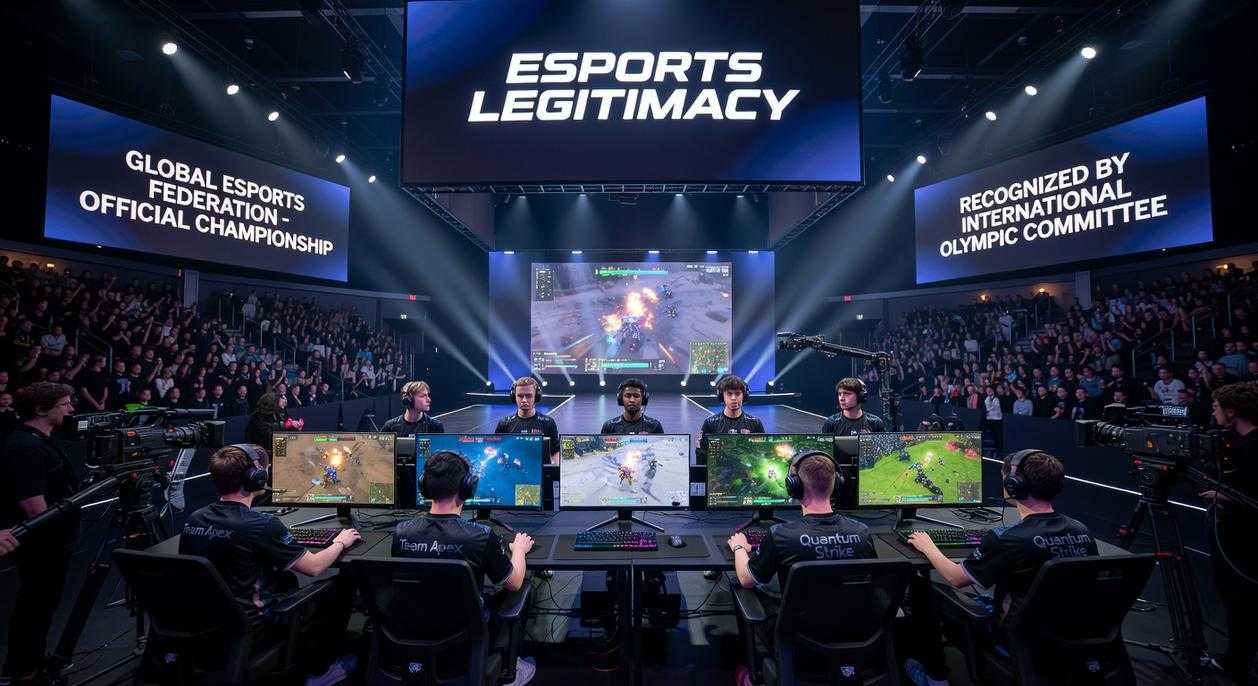
Then there’s the Olympic question. Should esports be in the Games? Some say yes, it’s competition at the highest level. Others point to violence in popular titles or argue that video games aren’t physical enough. As the debate over whether esports should be included in the Olympics intensifies, the emergence of innovative platforms like Gaming Tech Befitgametek highlights the evolving nature of competition and skill in the digital age.
I think the debate itself is what matters. The fact that we’re even having this conversation about why gaming should be a sport befitgametek shows how far things have come.
Global recognition would change everything. But we’re not there yet.
A New Era of Competition
You came here asking whether gaming deserves to be called a sport.
The answer isn’t as simple as yes or no. It depends on how we define athleticism in 2024.
Gaming demands strategy, split-second decisions, and real physiological stress. Professional players train for hours every day. Their reflexes and mental endurance get tested under pressure that would break most people.
But here’s the real issue: perception.
The skills are there. The competition is fierce. The physical toll is documented (carpal tunnel, eye strain, stress injuries). Yet many still can’t see past the controller.
Look at what’s already happened though. Stadiums fill with fans. Prize pools hit millions. Sponsors line up. Training facilities rival traditional sports complexes.
The infrastructure exists. The money flows. The dedication matches any athlete you’ve ever watched.
why gaming should be a sport befitgametek isn’t just about checking boxes on some official definition. It’s about recognizing that human competition evolves.
We don’t need to replace football or basketball. We’re watching the definition of sport expand to include new forms of competition that test different human capabilities.
The debate will continue. But while people argue over labels, esports keeps growing into something that looks, feels, and operates exactly like professional sports.
Maybe the future isn’t about choosing between old and new. It’s about making room for both.
 Elyndra Vornhaven has opinions about game reviews and analysis. Informed ones, backed by real experience — but opinions nonetheless, and they doesn't try to disguise them as neutral observation. They thinks a lot of what gets written about Game Reviews and Analysis, Player Strategy Guides, Esports Updates and Highlights is either too cautious to be useful or too confident to be credible, and they's work tends to sit deliberately in the space between those two failure modes.
Reading Elyndra's pieces, you get the sense of someone who has thought about this stuff seriously and arrived at actual conclusions — not just collected a range of perspectives and declined to pick one. That can be uncomfortable when they lands on something you disagree with. It's also why the writing is worth engaging with. Elyndra isn't interested in telling people what they want to hear. They is interested in telling them what they actually thinks, with enough reasoning behind it that you can push back if you want to. That kind of intellectual honesty is rarer than it should be.
What Elyndra is best at is the moment when a familiar topic reveals something unexpected — when the conventional wisdom turns out to be slightly off, or when a small shift in framing changes everything. They finds those moments consistently, which is why they's work tends to generate real discussion rather than just passive agreement.
Elyndra Vornhaven has opinions about game reviews and analysis. Informed ones, backed by real experience — but opinions nonetheless, and they doesn't try to disguise them as neutral observation. They thinks a lot of what gets written about Game Reviews and Analysis, Player Strategy Guides, Esports Updates and Highlights is either too cautious to be useful or too confident to be credible, and they's work tends to sit deliberately in the space between those two failure modes.
Reading Elyndra's pieces, you get the sense of someone who has thought about this stuff seriously and arrived at actual conclusions — not just collected a range of perspectives and declined to pick one. That can be uncomfortable when they lands on something you disagree with. It's also why the writing is worth engaging with. Elyndra isn't interested in telling people what they want to hear. They is interested in telling them what they actually thinks, with enough reasoning behind it that you can push back if you want to. That kind of intellectual honesty is rarer than it should be.
What Elyndra is best at is the moment when a familiar topic reveals something unexpected — when the conventional wisdom turns out to be slightly off, or when a small shift in framing changes everything. They finds those moments consistently, which is why they's work tends to generate real discussion rather than just passive agreement.